
An appeal raising fourteen grounds leads to a new trial after the Nova Scotia Supreme Court finds a “miscarriage of justice” in Darren Marshall’s prosecution.
By Dispensing Freedom staff
The Cannabis Act and Excise Act convictions of Micmac Rights Association member Darren Marshall Jr. of Millbrook First Nation, have been overturned after the Nova Scotia Supreme Court ruled that he was denied a fair opportunity to present his defence.
In R. v. Marshall, 2026 NSSC 332, released October 29, 2026, Justice Joshua Arnold quashed Marshall’s convictions and ordered a new trial before a different Provincial Court judge. The ruling concerns Marshall, whose Flower Barn treaty truckhouse at Millbrook was raided in June of 2021.
Justice Arnold ruled that:
The unequal treatment of the parties, together with the trial judge’s evident confusion about several of the appellant’s arguments, and her assessment of the evidence as “at times jumbled and unclear”, establishes that “a well-informed and objective person would find an appearance of unfairness so serious that it would shake their confidence in the administration of justice — a high bar” (Kahsai, at para. 76).
The result is a significant victory for Marshall and all supporters of Mi’kmaq rights. It also calls for renewed public scrutiny of a case whose earlier rulings circulated widely as evidence against Mi’kmaq cannabis-rights claims.
Marshall’s notice of appeal, filed by renowned cannabis lawyer Jack Lloyd, advanced a total of 14 grounds challenging the handling of the trial, the dismissal of his constitutional defence and his sentence. However, rather than addressing the issue of the summary dismissal of the Aboriginal and treaty rights question, or the thirteen other reasons for appeal, Justice Arnold focussed on the miscarriage of justice that took place in the trial process itself.
The basis of Justice Arnold’s decision concerned oral closing arguments about whether the Crown had proved the acts constituting the offences. The Crown made its submissions but defence lawyer Jack Lloyd’s arguments were postponed so he could respond to the Crown’s material which had just been provided to him.
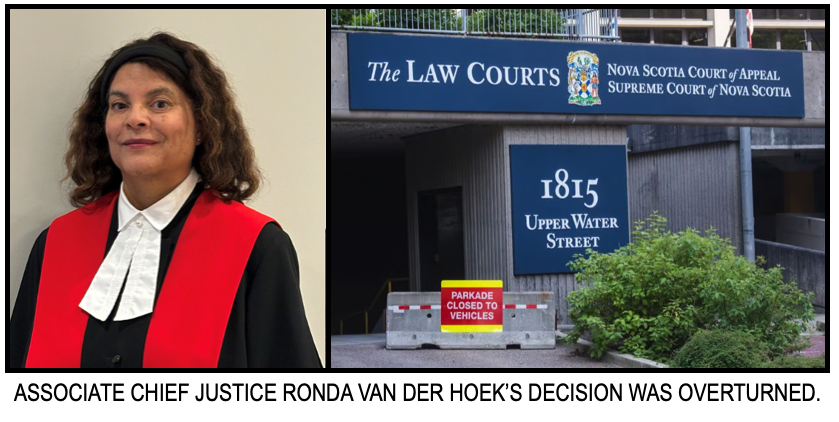
After further delay, including the trial judge’s unexpected surgery, Associate Chief Judge Ronda van der Hoek announced that she had reached her conclusion about the guilt of defendants without ever hearing the scheduled defence argument. Eight months later she finally provided her written trial decision and the decision summarily dismissing the constitutional defence.
Justice Arnold found that van der Hoek’s failure to hear the defence argument was inadvertent, but serious. Written submissions were not an adequate substitute in these circumstances, particularly because the Judge van der Hoek’s trial decision reasons revealed her uncertainty about aspects of the defence’s arguments. Marshall did not have to prove that oral submissions would have changed the result. The unequal opportunity to argue the case itself produced a miscarriage of justice.
Justice Arnold quoted R. v. Prior, 2010 NLCA 61 on the fundamental importance of hearing the oral argument:
“The contest that is a trial involves not just the hearing of evidence and cross-examination but also an opportunity for the application of the arts of advocacy and persuasion. The granting of an opportunity to practice these arts is fundamental to a trial – without such opportunity there is, essentially, no complete trial.”

14 grounds to appeal a bad decision
The 14 original grounds that Marshall appealed van der Hoek’s decision reveal that the decision suffered from many issues beyond the failure of the Judge to hear the defence’s oral arguments. The reasons were the following:
- Overlapping convictions: The judge allegedly misapplied the Kienapple principle, which concerns multiple convictions for the same delict, impairing the defence’s ability to prepare its constitutional materials and response to summary dismissal.
- Premature production of the defence record: The defence allegedly had to produce its materials before receiving a ruling with reasons concerning the offences.
- Uncertainty about the convictions: The judge allegedly required the constitutional application before identifying the offences on which Marshall had been convicted and explaining why.
- Continuity of evidence: The judge allegedly applied the wrong legal standard to the defence’s challenge concerning the handling and continuity of the seized evidence.
- Delayed reasons: The notice alleged a delay exceeding eight months, with the conviction reasons and constitutional dismissal delivered on the same day. It argued that this impaired preparation of the constitutional record and created an appearance of bias.
- The summary-dismissal test: The judge allegedly misapplied R. v. Haevischer when dismissing the constitutional application without a full hearing.
- Apparent prejudgment: The notice alleged that statements by the judge indicated she did not intend to hear the constitutional challenge, creating an impression of bias.
- Initiating summary dismissal: The notice alleged that the judge independently introduced the Haevischer process without a request from the Crown.
- Indigenous ancestry and sentencing: The notice alleged that Indigenous ancestry improperly increased the punishment, contrary to Gladue principles, and that the judge repeatedly confused Darren Marshall with Donald Marshall.
- Unclear sentencing basis: The defence challenged the twelve-month conditional sentence on the Excise Act matters, alleging that unresolved Kienapple issues left unclear which offences attracted the sentence.
- Treatment as a test case: The notice disputed the judge’s conclusion that the prosecution was not a test case, pointing to its procedural history and the parties’ positions. Of note, the case was later used as a test case being cited in numerous other proceedings.
- Unsupported broader allegations: The defence challenged reliance at sentencing on an alleged proliferation of illegal cannabis operations on First Nations lands, saying this lacked an evidentiary foundation before the court.
- Community views: The notice disputed the finding that Indigenous communities opposed cannabis dispensaries on their lands, alleging contrary evidence and developments supporting community acceptance.
- Aboriginal-rights analysis and oral evidence: The judge allegedly misapplied the Van der Peet test during summary dismissal, preventing Marshall from calling oral evidence supporting his section 35 application.
Several grounds therefore concerned a central question: did the process give the defence a fair opportunity to develop and present its constitutional case? Others challenged the treatment of evidence, overlapping charges and assumptions informing punishment. The appeal judgment did not resolve any of those other allegations – it simply ordered a new trial.
Mainstream media fans the flames of ignorance
Van der Hoek’s summary dismissal of the constitutional question (R. v. Marshall et al., 2024 NSPC 33,) was delivered on June 7, 2024 on the same day that she gave her decision finding the defendants guilty in the acteus reus criminal proceedings.
Her ruling granted an application to summarily dismiss the Aboriginal and treaty-rights defence under the Haevischer framework with no consideration of the possible evidence from Mi’kmaw knowledge holders. The judge considered the proposed evidentiary foundation of two expert reports – which she compelled the defence to provide before even knowing her reasons for finding the defendants guilty, and concluded that the claim was “manifestly frivolous.”
Mainstream media jumped on the Marshall decision when it came out. So far, they have been silent on the appeal decision released last week.
In 2024 a Canadian Press report circulated under the headline “Nova Scotia judge rejects constitutional arguments for Indigenous cannabis shops.” Its text explained the summary dismissal and weaknesses the judge identified in the proposed evidence. The story’s repeated emphasis on rejection could leave readers unfamiliar with court procedure thinking the underlying rights question had received a complete hearing.
Another example appeared in the Western Standard on April 5, 2025: “Nova Scotia judge rules no treaty right to sell marijuana without licence.” That wording presented a broad answer about treaty rights, obscuring the narrow procedural and evidentiary basis of the constitutional dismissal.
A web survey identified at least 18 news publications or republications connecting the original Marshall rulings to Aboriginal or treaty rights, including eight placements on conventional mainstream news sites. Much of the initial coverage was simply republishing syndicated Canadian Press reporting. Later stories continued to invoke the ruling in broader disputes over Indigenous cannabis rights, while APTN specifically questioned the province’s interpretation of it.
The impact of van der Hoek’s original decision travelled far and wide. In Ottawa, Ontario Algonquin and Mohawk cannabis trading posts had the decision referenced to them in conversations with local police. For their part, the RCMP in PEI were following the case closely, and reportedly decided to raid the Mniku Trading Post in Abegeit First Nation as a result of the decision. As recently as last month, Judge Michie of Amherst Provincial court, approvingly referred to the Marshall decision in summarily dismissing an application from MRA member Cody Knockwood regarding his Aboriginal and treaty rights.
And of course Darren Marshall of Millbrook First Nation bore the highest cost. He served more than 6 months on house arrest on the basis of an unfair trial where the judge didn’t even hear his defence. Marshall’s attempts to have his sentence suspended pending appeal, were rebuffed due to court scheduling issues. Although Marshall’s convictions have now been quashed, but he should have never been charged in the first place. Cannabis is legal in Millbrook First Nation. Mi’kmaw people operate and self-regulate the cannabis industry in Millbrook First Nation, with community support, and shops continue to operate as they always have.
It is not yet clear if the Crown will seek to hold a new trial, given that Marshall has already served a sentence for the alleged offences. While praise is due to Justice Arnold, it wouldn’t be the first time the Nova Scotia justice system has failed a Mi’kmaw man named Marshall, and sadly, it probably won’t be the last time either.

























Comments are closed.