
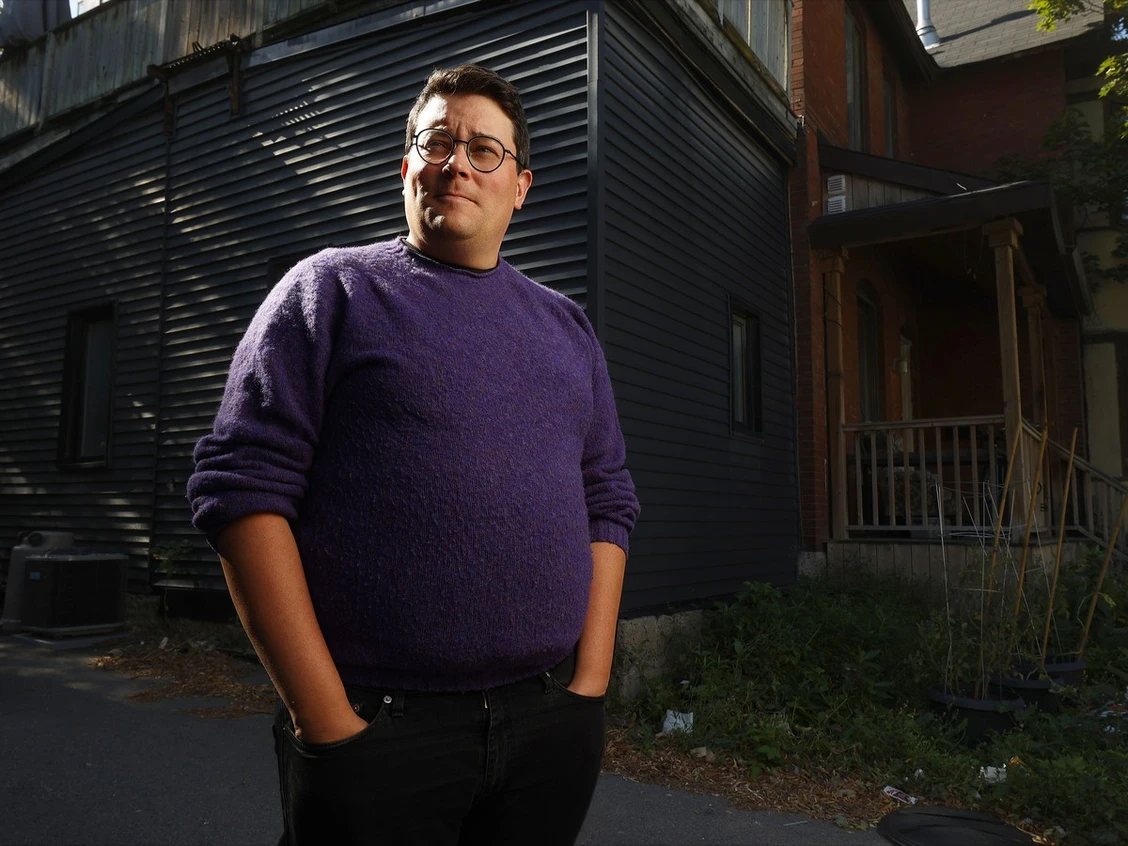
Two members of the Mohawks of the Bay of Quinte say their landlords evicted their shops after Ottawa police contacted them.
From The Ottawa Citizen by Matteo Cimellaro September 14 2026
The email came one day in May, 2025.
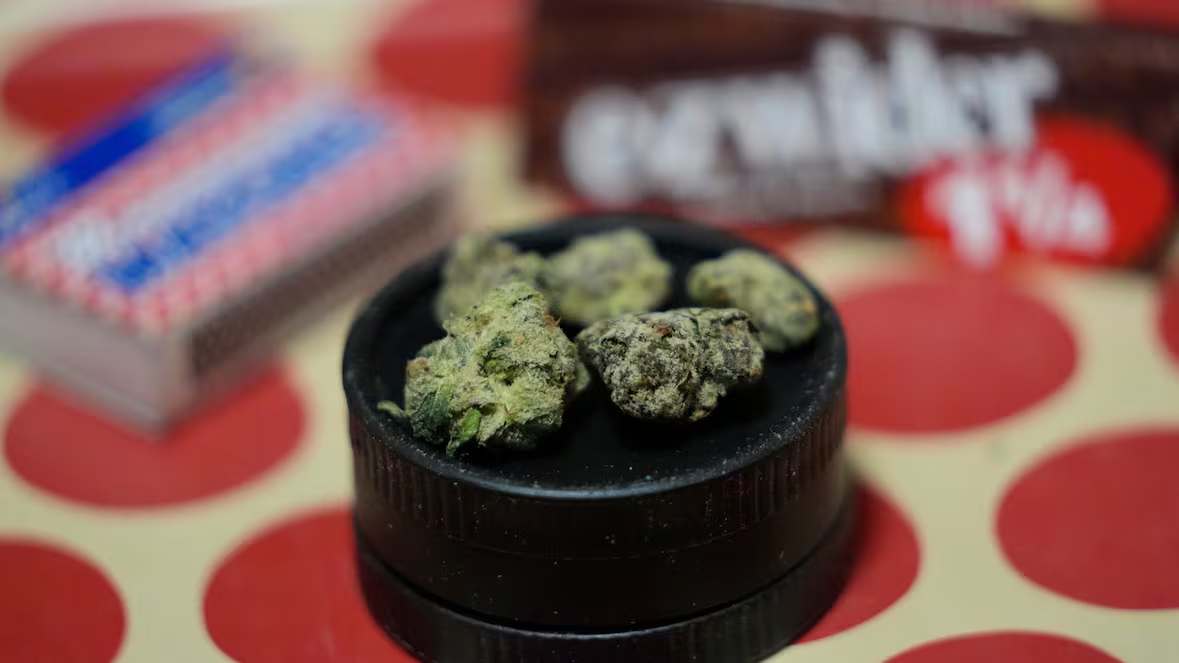
Bryan Brant’s landlord said that the police had contacted him about his cannabis dispensary and that Brant was being evicted. He had 48 hours to vacate his shop — Native Cannabis Depot — on Bank Street.
Brant, as an Indigenous businessperson, claimed he had rights to open and run such an unlicensed shop. But the closure became just one of several in Ottawa that he and another Indigenous owner have been fighting.
Brant and Robert Fisher separately owned unlicensed shops and were evicted last year after their landlords were contacted by the Ottawa Police Service.
Fisher and Brant both subsequently filed complaints at the Ontario Human Rights Tribunal against the Ottawa Police Services Board, claiming that the police’s actions were “abusive, discriminatory and racist,” and that they had treaty rights to operate the businesses, according to tribunal documents. Those complaints were dismissed due to jurisdictional issues, but Fisher has also filed an application in the Ontario Superior Court of Justice.
Their fight is part of a larger struggle over whether Indigenous business owners should be able to open unlicensed pot and tobacco shops off reserves or whether there should be a separate licensing system for them altogether.
“The Mohawk people have faced indisputable historic racial discrimination and economic marginalization due to the legal and practical actions of the Crown for centuries,” Fisher’s application said.
“Restricting Mohawk Nation economic development solely to the territory of Indian Act Reserves is a further perpetuation of the Crown’s historic racial discrimination against and economic oppression of the Mohawk Nation.”
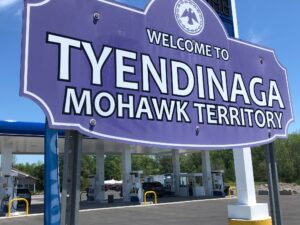
Fisher’s court application, which involves a shuttered cannabis shop he owned in Kingston, claims that, as a member of the Mohawks of the Bay of Quinte, he has the right to operate cannabis dispensaries outside of Tyendinaga Mohawk Territory, the First Nation’s main reserve in southeastern Ontario. Fisher argued in court documents that the federal government failed to consult the Mohawk Nation when it legalized recreational cannabis by passing the Cannabis Act in 2018 and developed regulations for its sale.
Read More:
- Ottawa police shut down another unlicensed cannabis dispensary on Dalhousie Street
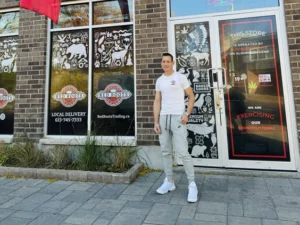
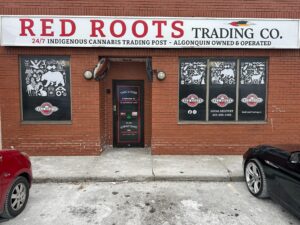
- Red Roots Trading Company opens fourth location on goodwill and robust sales
To back up this point, Fisher cited an interim report published in 2023 by the Senate committee on Indigenous peoples, which found that the federal government had not “meaningfully consulted” First Nations since the Cannabis Act came into effect.
Gordon Campbell, the lawyer representing both Fisher and Brant, called the application a “constitutional test case” over the economic development rights of Indigenous peoples.
“We believe the evidence and arguments will be of national legal significance,” Campbell said in an email.
Location location location
Central to the case is whether Indigenous business owners can operate cannabis shops without provincial licences on land that is outside of their reserves. There were more than 75 such cannabis stores operating on Mohawk territory in the Bay of Quinte as of 2024, according to Fisher’s application.
In Ottawa, Fisher owned several cannabis dispensaries called My Legacy before being evicted. In his human rights complaint, Fisher claimed the Ottawa Police Service sent a letter to Fisher’s landlord of a Dalhousie Street location, threatening fines and potential imprisonment and asking for consent to search the store. In the letter, the police said that “the traditional territory at issue … remains subject to all applicable provincial laws … and the OPS requires that those laws be observed,” according to court documents.
In his human rights complaint, Fisher said that his business was evicted despite having paid rent on time since first occupying the building. He claimed that the police also sent similar letters to his landlords at other locations on Bank Street and Innes Road, and that he was subsequently evicted from them, too.
In his complaint, Fisher sought $1 million in compensation and asked for “proper consultation and accommodation” of his treaty rights. He also wanted his business’s rental agreement restored and the “discontinuance of similar government action.”
Brant, who is also a member of the Mohawks of the Bay of Quinte, also sought $1 million in compensation after being evicted by landlords who had been contacted by police.
In his complaint, Brant claimed the OPS urged his landlord at his Bank Street shop to evict him. Before being evicted, Brant said police had come into the shop about a week before, but took no action.
In letters to landlords, the OPS acknowledged the importance of “respecting the Indigenous rights and advancing reconciliation,” but added the police service also “bears responsibility for ensuring compliance with relevant laws,” according to tribunal documents.
Brant was also the owner of a cannabis store called Ontario Tribal Cannabis before being evicted from a Rideau Street building. At a third store — Indigenous Cannabis Culture — on Dalhousie Street, Brant’s employee and landlord were charged by police, according to Brant’s submissions.
Both Fisher and Brant said they were never charged as owners of the stores.
The tribunal dismissed both cases as they fell outside of its jurisdiction.
“In any event, again, whether and how the applicant can participate in the sale of cannabis, or the source of his lawful right to do so — inherently, Constitutionally, or by licence — is not a human rights issue,” Sally Ashton of the Ontario Human Rights Tribunal wrote in the decision.
Fisher’s complaint was dismissed on similar grounds.
In a statement, the Ottawa Police Service Board said it “respects the independent processes of the Human Rights Tribunal of Ontario and does not comment on individual matters before the Tribunal.”
Gabriel Maracle, a member of Tyendinaga Mohawk Territory and a Carleton University political science professor who studies Indigenous governance in Canada, told the Ottawa Citizen that cities and police often go after the landlord to avoid constitutional challenges.
“If there is an actual police raid that shuts down these pot shops, then it is the basis of a Charter challenge,” Maracle said.
Cannabis constitutional challenges need to be careful, lawyers say
Despite the dismissal of his human rights complaint, Fisher’s application is set to go to court next year.
Sara Mainville, a lawyer and managing partner for JFK Law, said that to get rid of the black market for cannabis First Nations will need to be given jurisdiction to license stores.
However, Mainville, who represents the Mohawks of the Bay of Quinte and other First Nations on cannabis issues, warned that rushing to push for rights to sell cannabis off reserve before establishing those licensing regimes could create conflicts with the provincial government. She said she also feared that an individual constitutional challenge such as Fisher’s (rather than a collective one supported by a First Nation) could also fail due to a high bar set by the courts to establish constitutional rights.
“The nexus to First Nations and collective rights is really important here,” Mainville said.
Mainville added she worries what cases like Fisher’s could mean for other challenges making their way through the court system, such as a landmark 2023 decision in Quebec called R. v. Montour. In that case, a judge determined that rights of two members of the Mohawk Nation of Kahnawà:ke were violated because the government had not consulted the Mohawks when it created the Excise Act. The two men had been charged under the act with failing to pay taxes on large quantities of tobacco imported from the United States.
The Quebec government is appealing that decision.
The case could expand the jurisdiction of First Nations to create their own laws based on inherent rights, Mainville said. It could also have implications for how federal and provincial governments approach imposing regulations on First Nations when it comes to cannabis and tobacco.
Maracle said the Montour case, and by extension the Fisher case, could help further expand the definitions of Indigenous rights beyond court tests that require First Nations or individuals to prove a practice existed before European settlers made contact with Indigenous peoples.
What that might mean for Indigenous business owners such as Brant and Fisher remains to be seen.






Comments are closed.