
From APTN by Kenneth Jackson October 19 2026
I’m driving east along Highway 344 in the Mohawk nation of Kanehsatà:ke when I notice a silver compact SUV coming up on me quick in my rearview mirror. There’s been a light rain all morning, so it’s initially difficult to make out who is driving until a heavyset man gets close up and I see his eyes locked on me.
“Are we being followed?” I say to my camera operator, Jeff Dorn, sitting next to me in the passenger seat holding a black pocket-sized gimbal camera. We’ve been using it all morning to film dozens of cannabis dispensaries and casinos that line the highway through the small Mohawk community about 50 km. west of Montreal on the Ottawa River.
I veer right and into the parking lot of The Green Room cannabis dispensary and the stranger does the same, so I quickly pull into an open parking spot to see what he does. He creeps past our black rented minivan, turning his head in our direction as he loops around to the other side of the horseshoe-shaped parking lot, past the casino simply named “CASINO” in large red letters, but instead of an “I” there’s an arrow pointing down to the front door. He parks in front of the dispensary, which has its own large sign saying “STAY HIGH” in bright green letters.
The large complex also has a gas pump in the far right corner; the kind with its storage barrel sitting above ground.
The man is now facing us parked about 20 metres away.
He keeps looking at us, as the windshield wipers go back and forth on low for about 10 seconds. He must have seen Dorn’s little camera, which is about the size of a saltine cracker.
“Oh, no doubt,” Dorn says. “I’m hanging it out the window.”
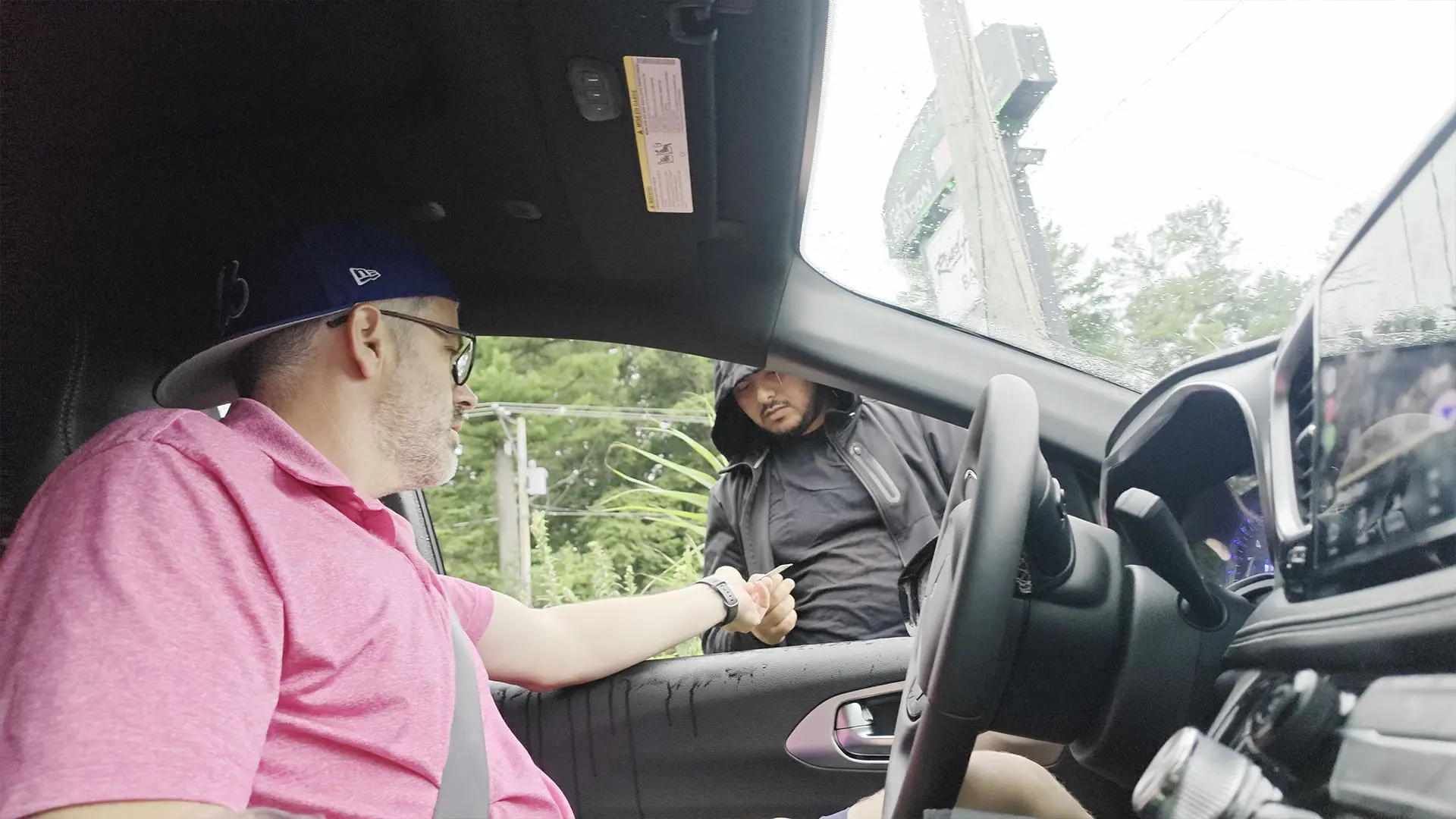
No sooner does he say that than the man steps out of his SUV, flipping the hood of his unzipped black rain jacket over his head as he walks towards me on this wet and dreary morning in the middle of August.
“Can I help you?” I say to him, rolling down my window.
“You’re filming. You good,” he says, coming right up to me. “You’re filming there.”
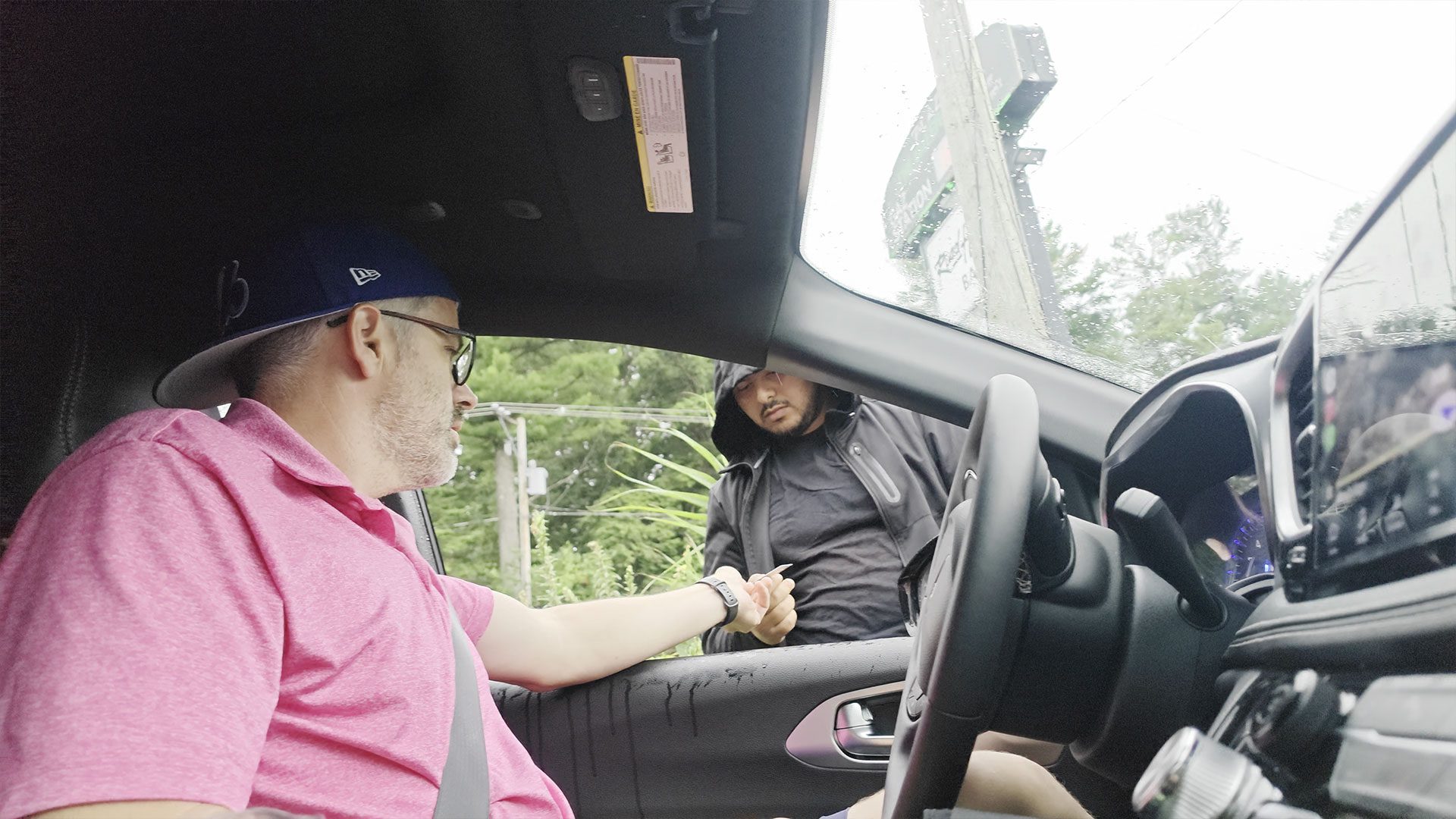
“Yeah, we’re reporters,” I tell him. Even though I don’t have to, I dig out an APTN Investigates business card from my pants pocket and hand it to him. I don’t want to escalate the situation.
“Ah, reporters?” he asks.
“With APTN,” I reply, and he seems satisfied with my answer. He turns to walk away when I ask him what shop he works for.
“Canna,” he says.
“Canna?”
“Yep.”
Canna has several names, including Canna Wholesalers and Canna Cartel. Its owner, Jake Guindon, boasts on his Facebook page an AI-generated cover photo of a dark-hooded skull in a bandana flipping two tattooed middle fingers behind crossed rifles, surrounded by “CANNA CARTEL CREW” and the slogan “WE DON’T TAKE SHIT WE TAKE OVER.”
Guindon’s shop is 3.8 kilometres away. That’s how far his security guard drove to confront us in broad daylight after we filmed the store while never stopping our van.
“We were there filming for five seconds—bang,” I tell the camera once the guard walks off.
“Followed us down the road, on us immediately. They’re paying attention to every single person who stands out, and if you stand out, they’ll follow you.”
During the three days I’ve been in Kanehsatà:ke to film the documentary Devils on the Loose, I have seen how fast things can turn if locals feel you stepped out of bounds. This is especially true of the private security at some of these shops, who are posted around the clock.
Lawless on Highway 344
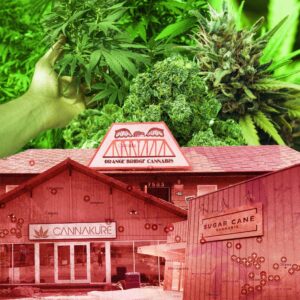
The cannabis industry is booming here and it has transformed the community into a volatile battleground. What started with a single unlicensed shop in 2018 has exploded into roughly 30 dispensaries, including megastores and casinos lining the main thoroughfare. Some play loud music all day, light up the night sky with neon and attract massive crowds. Even rapper Snoop Dogg performed here two years ago.
While the trade has made a handful of people rich, it has also turned Kanehsatà:ke into a magnet for organized crime.
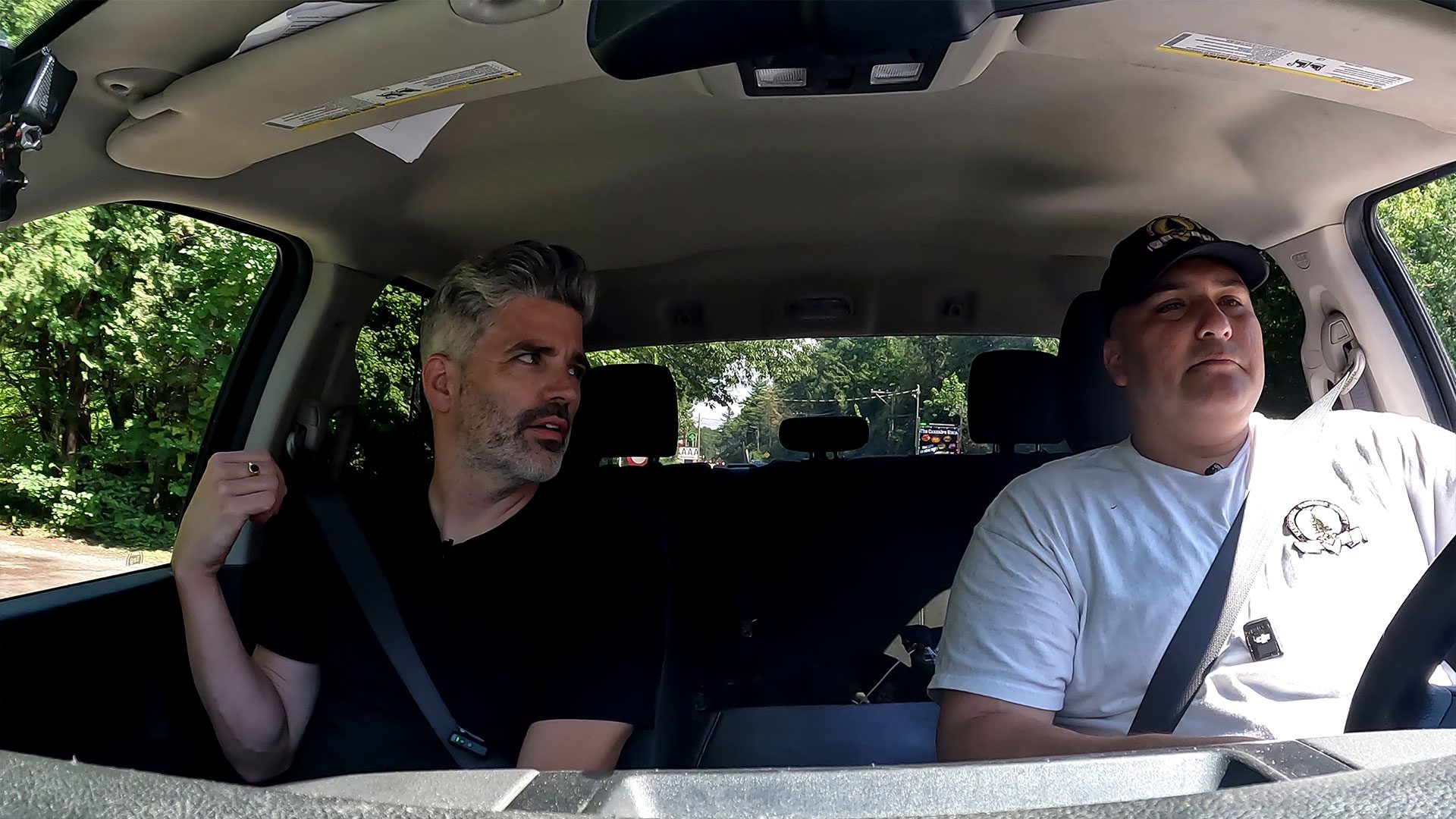
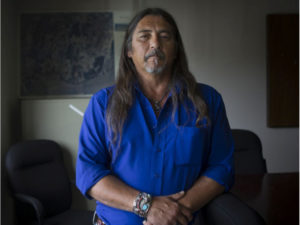
“We’re being invaded,” says Kane Montour, coordinator of the band-sanctioned Kanesatake Perimeter Security (KPS), which patrols the community unarmed.
“We’re being invaded and it seems like nobody gives a shit about us.”
Without any police, criminal syndicates from nearby Montreal have moved in to claim their piece of the pie.
“All of the mafias present in Montreal are here,” explains Brant Etienne, a council chief with the Mohawk Council of Kanesatake. “So you’re looking at Hells Angels, you’re looking at Italian mafia, Lebanese, Haitians, Crips, Bloods—all of it.”
On July 1, 2021, Arsène Mompoint, one of the most powerful street gang leaders in Montreal, was executed in broad daylight at The Green Room. Grainy security footage shows the gunman sauntering up, raising his arm and shooting Mompoint dead where he sat. The killer escaped using backwoods trails known only to locals, leaving behind a torched getaway car in a nearby cornfield. The hit remains unsolved.
Since then, the violence has raged on. More than 30 suspected arson attacks have scorched dispensaries over the last two years as rival factions fight for control.
“A lot of money started pouring into these cannabis shops, and with it … not enough money for everybody,” says investigative journalist Christopher Curtis, whose reporting on the territory has exposed the dark underbelly of the boom. “So then you start to develop these rivalries where one group will burn down another group’s dispensary.”
Drive-by shootings are almost as equally routine. Storefronts and local homes have been peppered with bullets. “You had two guys with Molotov cocktails try to attack a dispensary,” Curtis recalls. “The overnight security came out with a shotgun and took a shot at them.”
Private security guards now guard most of the shops 24 hours-a-day, often operating with the appearance of formal law enforcement. Some have tactical outfits and wear what appears to be bullet proof vests stationed out front of the stores as people from all over come to buy cheap weed.
“These people being hired by the shops as security, we know for a fact some of them are criminals,” Etienne says. “It’s not uncommon to drive by and you’ll see one of these during the day with, like, a pistol strapped to their thigh.”
At night, tensions can spike. Just hours before our encounter with the Canna guard, at about 12:30 a.m. on August 19, a group of young men in a sedan pulled into Canna’s parking lot after hours to make a simple U-turn. A private security guard in a dark pickup truck immediately pursued them onto Highway 344, allegedly ramming their car off the road.
“I wanted to do like a U-turn,” one of the visibly shaken young men tells us at the scene shortly after it happened. “I went in the shop, but I wasn’t supposed to be there… and he U-turned after us after we passed him. He tried to reach us, and he bumped into us.”
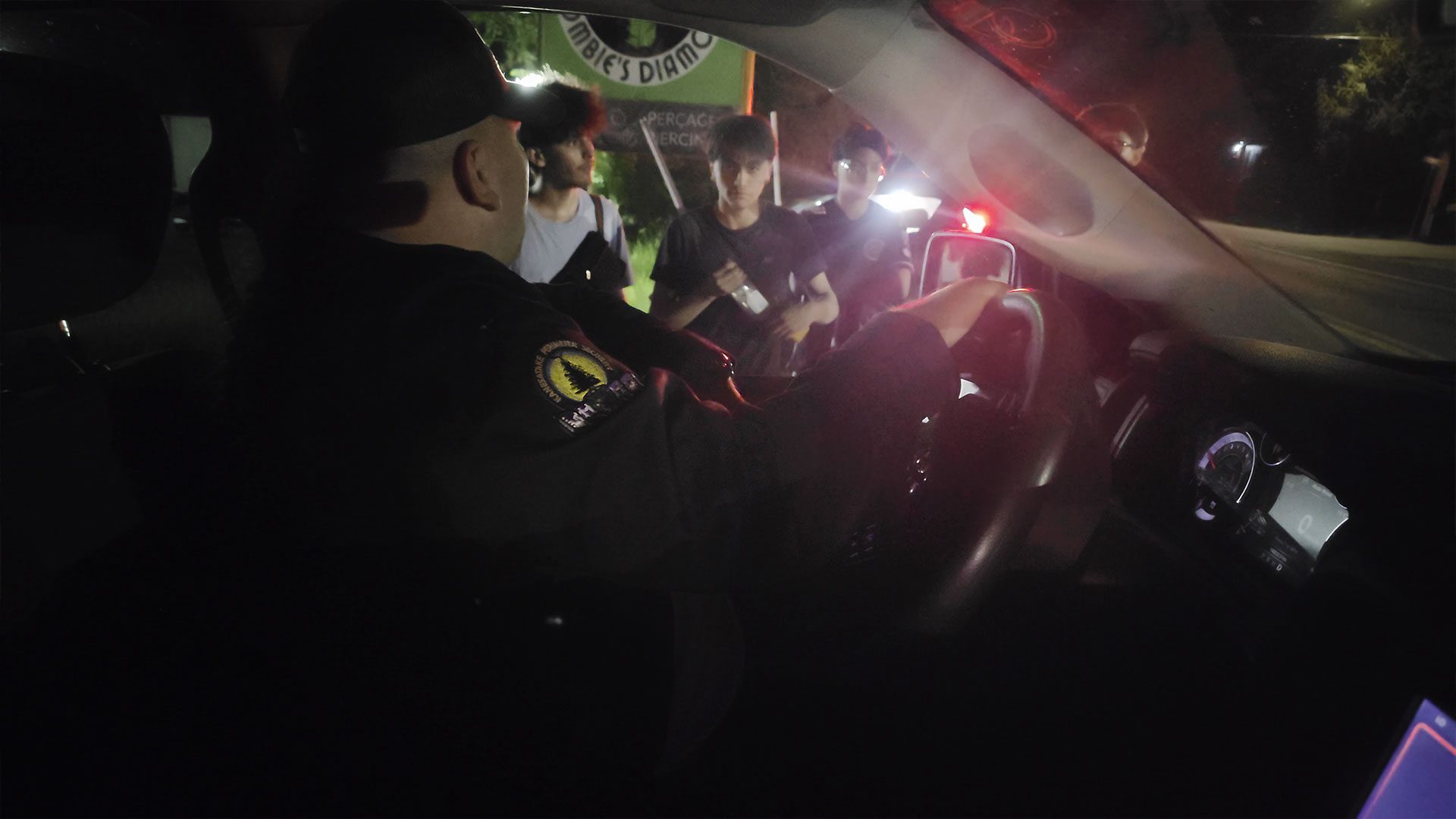
“PIT maneuver,” Montour says, referring to a precision immobilization technique, sitting his vehicle while the boys stood on the dark roadside and I filmed it all.
“Yeah. PIT maneuver,” the young man says. “That’s why we’re here.”
I followed up with Guindon, but instead of responding to my questions about Canna’s security, he blocked me on Facebook.
The Body in the Bunker
To understand the human toll of this lawlessness, Montour took me to an overgrown, decaying plot of land that once housed a school and gym, run decades ago by priests.
Beneath the brush lies a concrete bunker, roughly three metres deep. It was here that Montour made a horrific discovery in late May.
Montour had received a call from a community member who suspected someone was down in the bunker. He rushed to the site, walked down through the high grass and looked down in a hole about the size of a basketball rim at the top of the bunker.
At the bottom, lying on trash, was 24-year-old Ronnie Beltre Gonzalez.
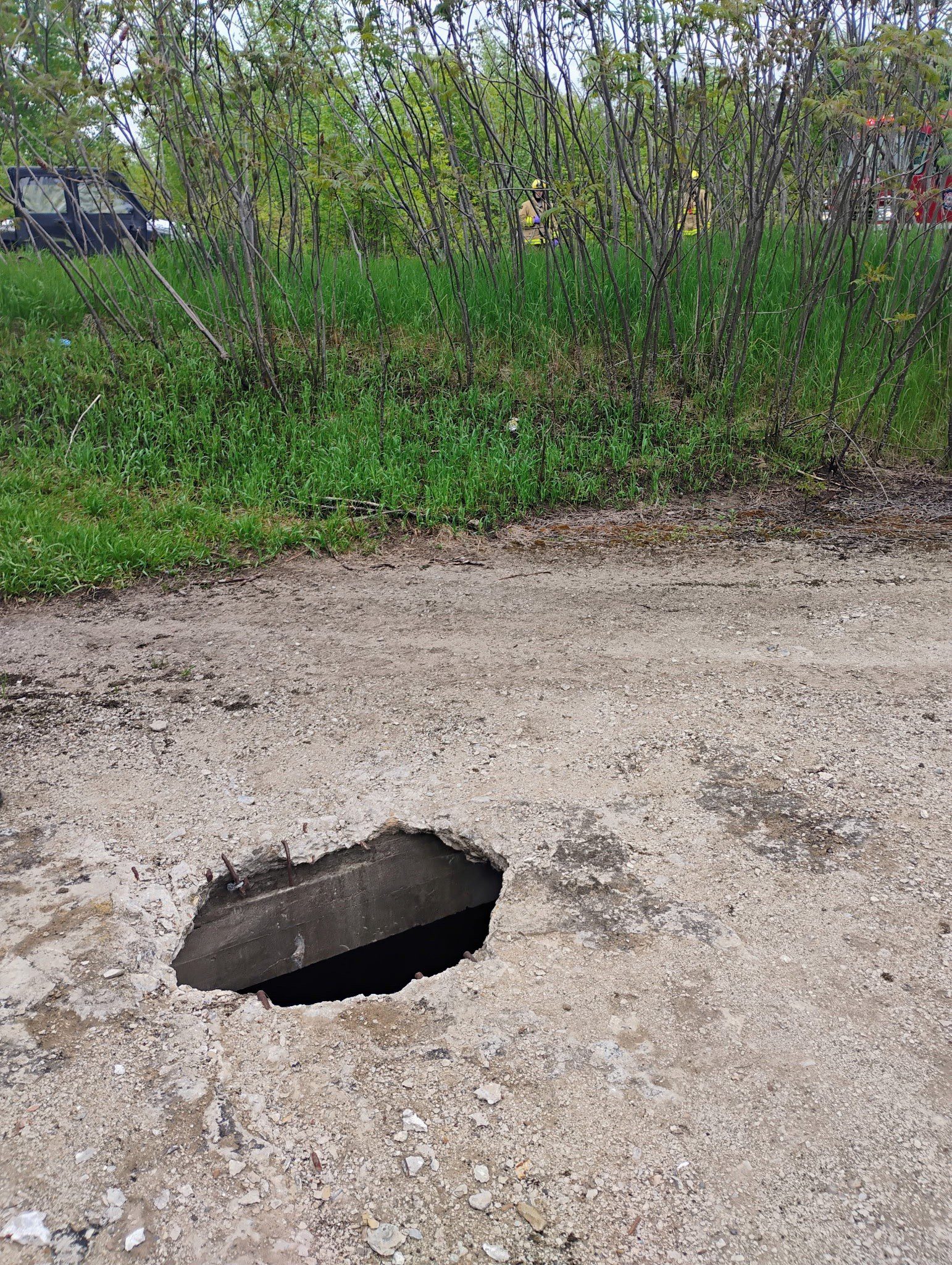
“I remember looking over, and when I looked into the hole, I saw right away it was apparent somebody was dead,” Montour says. “It was that Ronnie kid from Valleyfield. And he was on his back, his eyes were open, he was looking up.”
“Looking right at you?” I ask.
“Yeah, looking right at us.”
Hoping against hope that the teenager might just be paralyzed, Montour dropped to his knees and shouted down, asking if he could hear him. There was no response. Montour climbed down into the filthy pit to check on him, but it was too late. Gonzalez was dead from a gunshot to his head. Sources told APTN that Gonzalez had attempted to rob a local pot shop. An 18-year-old boy from Kahnawake was subsequently charged with first-degree murder.
“It’s never easy seeing a body,” Montour reflects later. “I’m the kind of person that, when something happens, I take that home with me. I think about that. I replay it in my mind a million times. My first thought was, ‘This poor kid.’ Regardless of what the speculations are of what he did or tried to do, at the end of the day, he’s still a kid. You know, he’s somebody’s son, somebody’s nephew, somebody’s grandchild.”
Finding bodies, responding to arsons and also a lot of car collisions are now part of daily life for Montour, as the leader of KPS. The security team patrols the territory between 7 a.m. and 11 p.m.
Montour says KPS is all that exists to maintain order, operating out of a modest office equipped with body cameras and satellite radios.
“Our day-to-day function is we kick out non-locals that aren’t supposed to be here,” Montour says during a ride along in his patrol vehicle. “We kick out people loitering or trying to commit crimes. When stolen cars come here, it’s us calling them in and putting out the fires when they get torched. We wear many hats … when there are shootings here, or bodies turning up, or fires, we’re dealing with all of it.”
He says the the local detachment of the Sûreté du Québec isn’t too far away, but it usually only responds to the serious collisions and reports of bodies or the odd raid looking for guns.
“We’re on our own,” he says.
Compradors and Contaminated Waters
The systemic collapse of authority in Kanehsatà:ke extends beyond violence. It is also altering the physical territory itself.
Along the picturesque shoreline where the Ottawa River meets the Lake of Two Mountains, massive commercial dump trucks have spent years backfilling the shorelines. Several dispensary owners are accused of illegally dumping thousands of tons of construction waste straight into the water to artificially expand their waterfront property lines.
“It should look like natural grass, a wetland. There’s a lot of fish habitat here,” says Curtis, pointing across the altered shoreline. “It shouldn’t be flat and dead like that. Even where there’s that little mountain of stone, that’s dumped waste.”
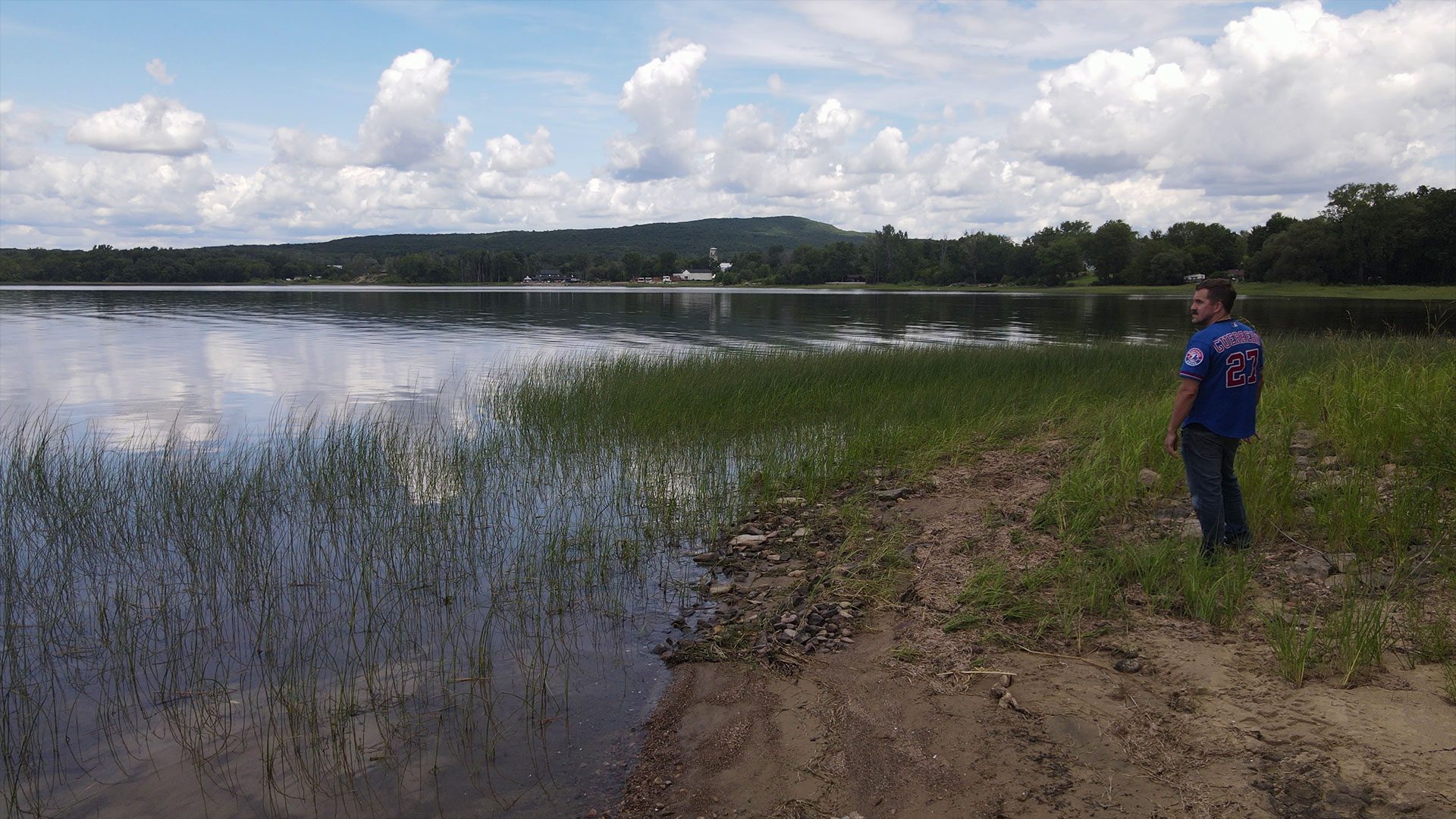
Curtis tailed heavy construction trucks from job sites in Montreal and Laval straight into Kanehsatà:ke for his online publication, The Rover. His investigative work exposed the scandal, eventually forcing the Quebec government to intervene. In 2025, 13 individuals and corporations were charged with environmental violations stemming from the illegal dumping.
The investigative work isn’t without risk, so Curtis met with us far away from the commercial strip where at least one dispensary owner has threatened to harm him and his family.
“You have two homicides that you know for sure are linked to the cannabis industry,” Curtis says. “Last November, in the middle of the night, one of the dispensary owners got shot in his house. And since then, there have been three more shootings.”
Yet, what hurts most is how this criminal takeover overshadows the genuine beauty and resilience of Kanehsatà:ke.
“You talk to the kids in this community, you talk to women in this community, and there’s real leadership and real vision,” Curtis emphasizes. “The kids won two lacrosse championships in like the first three years of their program being reborn. There’s a community center, a farm, a women’s health center that was just built. Good things are happening. I wish we could talk about that more, but instead we got to come back to this bullshit with the bikers and this bullshit with a handful of greedy people who don’t care who has to get killed.”
For Etienne, the internal division is painful. He openly calls out the community members who enable outside criminal syndicates for personal gain.
“The term is comprador,” Etienne says bluntly. “That’s an individual who has a stake in the interests of overriding overseers, bringing them in and making their goals their own. Sellouts, essentially.”
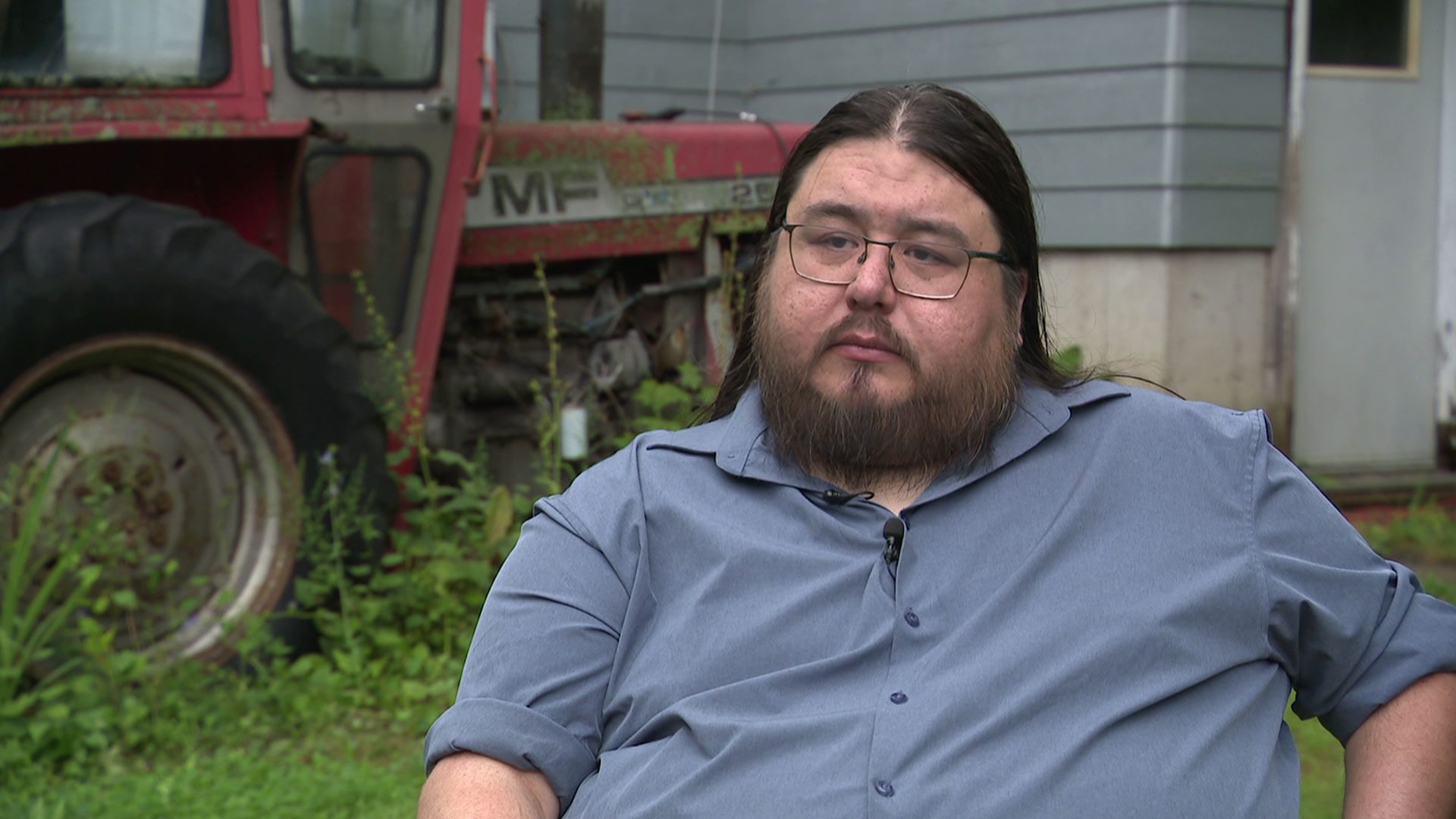
Etienne has paid a price for speaking out: his car tires have been slashed, his windshield smashed multiple times and he has faced physical assault. Still, he refuses to back down.
“I’m constantly worried that something will happen—not just to me, but my family,” Etienne says. “But I also realize nothing changes unless you change it. It’s devolving into an oligarchy. Wealthy individuals accumulate so much wealth that they can use that wealth to exert political power in an area. That’s what’s happening here.”
Silence on the Mountain
To escape the pressure below, Kane Montour goes up “the mountain”—a high, forested summit overlooking Kanehsatà:ke and the surrounding waterways.
He climbs into a rugged side-by-side off-roader, lights a cigarette and connects his phone to the vehicle’s Bluetooth speakers. As the engine revs, the jungle sound effects of Creedence Clearwater Revival’s “Run Through the Jungle” blast through the air.
With his hat turned backwards and a long dark braid hanging down the centre of his back, Montour looks over at me sitting next to him and smirks. He tells me he has a ritual: he likes to see if he can navigate the steep, treacherous path, covered in jagged rocks the size of beach balls, and reach the top before the song, or his cigarette, finishes.
The machine climbs easily, arriving at the crest in about three minutes and five seconds.
From the summit, the view is stunning. Thick canopies of white pines stretch out toward the water. It is a reminder of what Kanehsatà:ke was in 1990 during the Oka Crisis, when Mohawk land defenders stood toe-to-toe against the Canadian Armed Forces to protect these sacred trees—known as the Great Tree of Peace—from being cleared, and also a burial ground, to expand a public golf course.
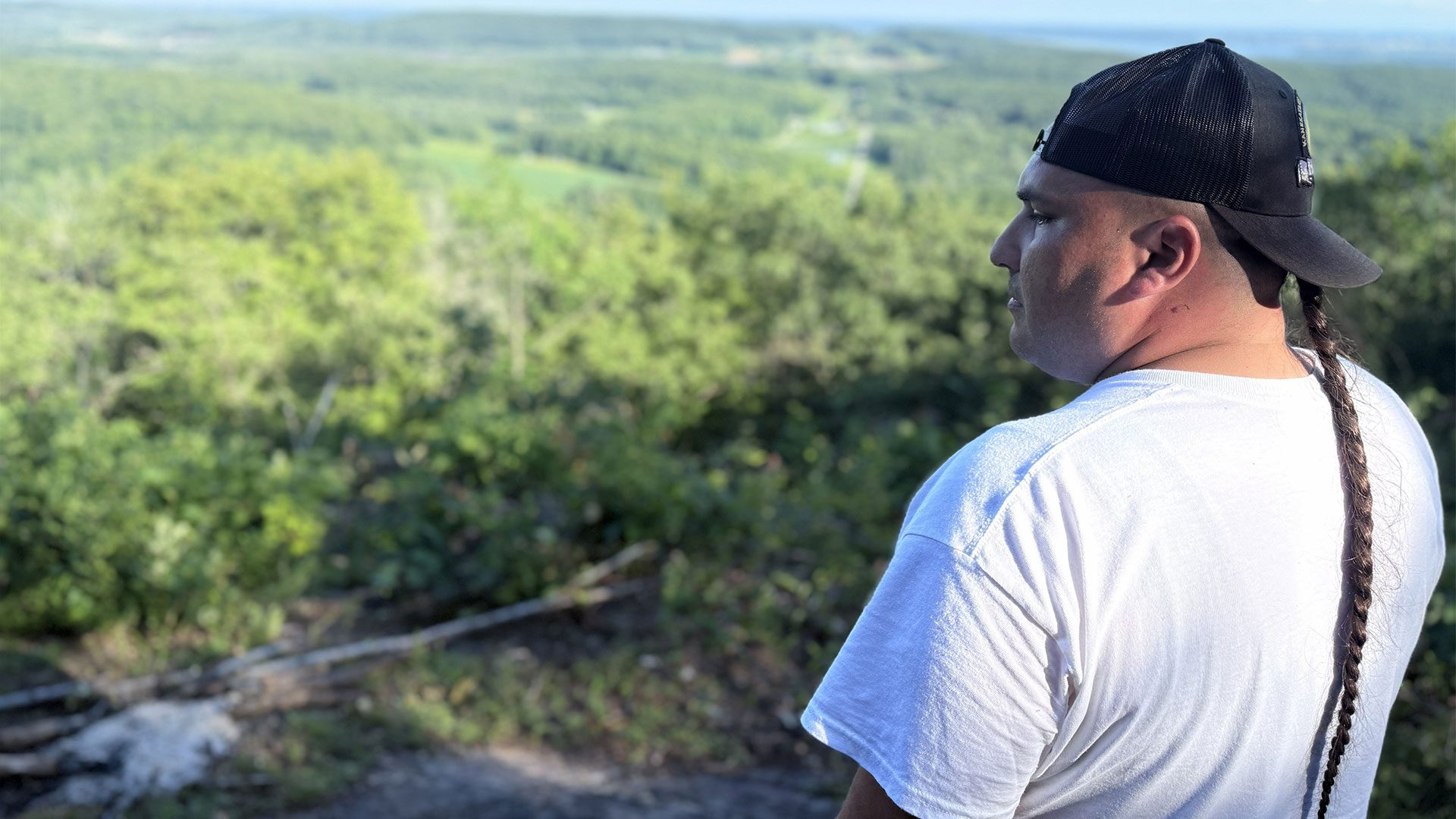
“This is where I like to come to wind down, you know?” Montour says, looking out over the quiet expanse. “When you’re up here looking down at everything, it’s like… our problems are so small. Nothing changes up here. With all the noise down there in the territory, you come up here and it’s quiet. I feel like it’s one of the only places we have left where we can just enjoy the silence (and) what Kanehsatà:ke used to be.”
For a moment, standing on the cliff’s edge, the tension on Highway 344 feels miles away.
Then, the handheld radio in Montour’s pocket crackles to life.
“Black Mercedes C300,” the dispatcher’s voice cuts through the mountain silence. “A skinny guy started shit at Little Tree and he said he’s coming back and they should hide.”
Montour leans in, his eyes narrowing. “Who left that on the group chat?” he asks.
“Sterling,” the dispatcher replies. “He’s working at Little Tree right now. This just happened, and he sent the license plate as well… He just texted me, said the guy tried to take a video and ripped out of here headed west. It sounds real.”
Montour, holding the radio close to his mouth. “Copy that.”
He lets go of the button and looks back down toward the valley-like terrain, where the green canopy conceals dozens of storefronts, security and turf wars.
“With all the stuff that’s happened here in the territory, it’s something that shouldn’t be taken lightly,” Montour says, turning back toward his off-roader.
“Usually, when something like that happens, it’s 50-50. Could be somebody just talking shit… or maybe they’re going to shoot the place up or start a fire later. Who knows, you know?”
He climbs back into the driver’s seat, turns the key and prepares to head back down into the noise.





Comments are closed.