
By Dispensing Freedom Staff

DIGBY, N.S. – A Mi’kmaq entrepreneur and Micmac Rights Association (MRA) member was seized by the RCMP in a warrantless raid on the Peace and Friendship Trading Post, jailed overnight in oppressive conditions, and brought to court in leg irons – all without any new charges being laid – in what former National Chief Del Riley described as a “racist violation of Charter, treaty, and Indigenous governance rights.”
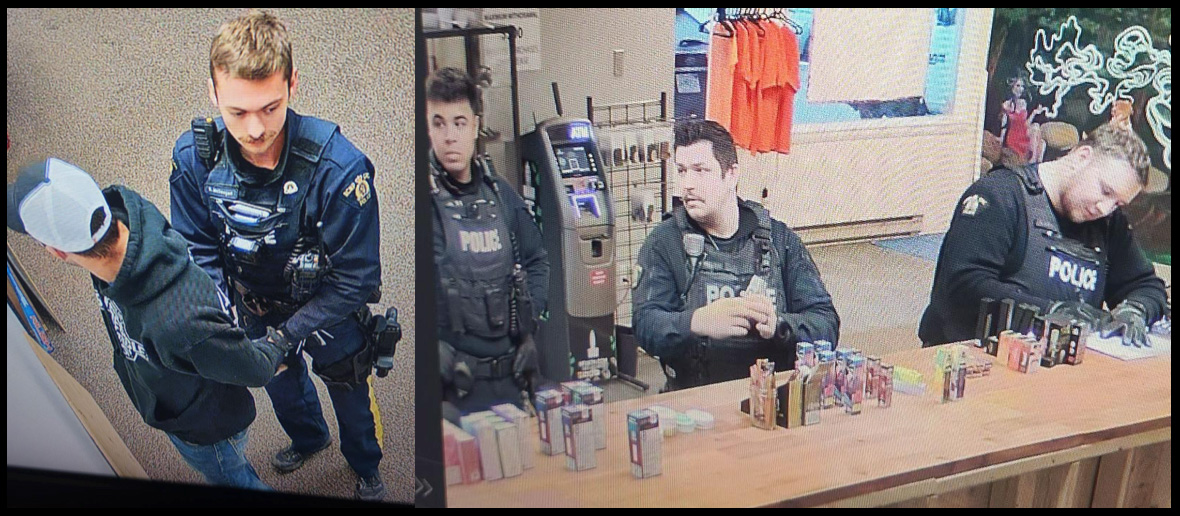
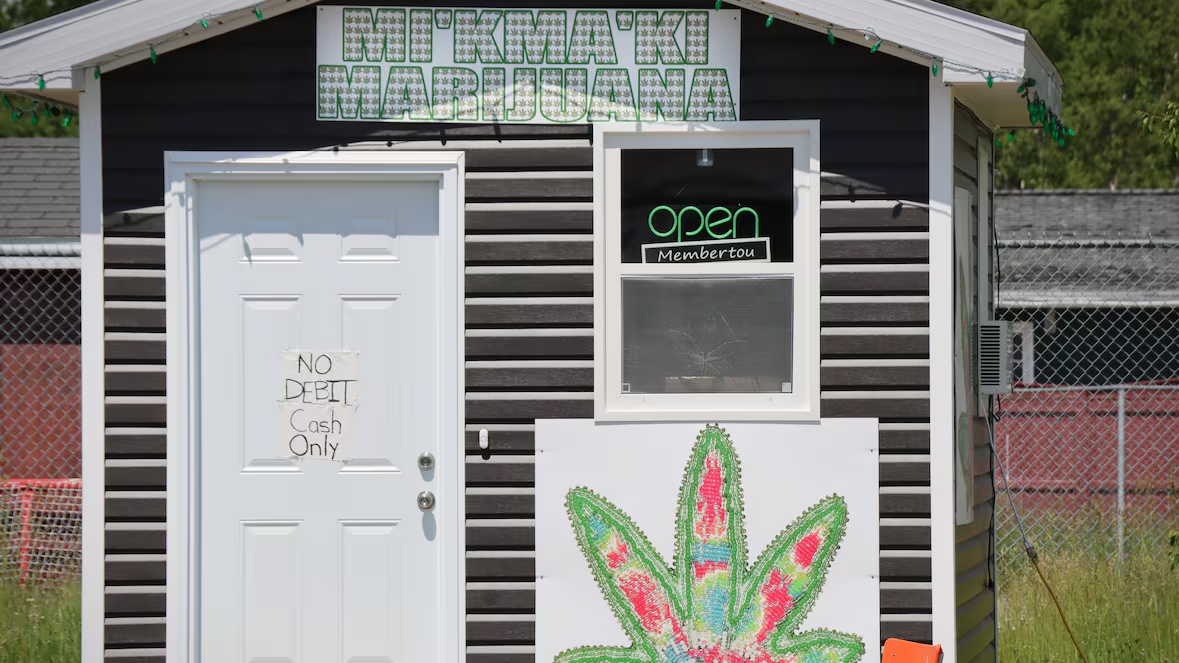
On the afternoon of January 6, 2026 a group of at least four RCMP officers entered the Peace and Friendship Trading Post at 305 Highway 303 in Digby County Nova Scotia. The post is one of more than sixty Mi’kmaq-operated treaty truckhouses regulated by the MRA.
In the shop, the officers arrested MRA member Dustin Whitman and told him he was being arrested “for a fingerprinting” connected to earlier provincial charges. When Whitman asked to see a warrant or paperwork, none was provided.
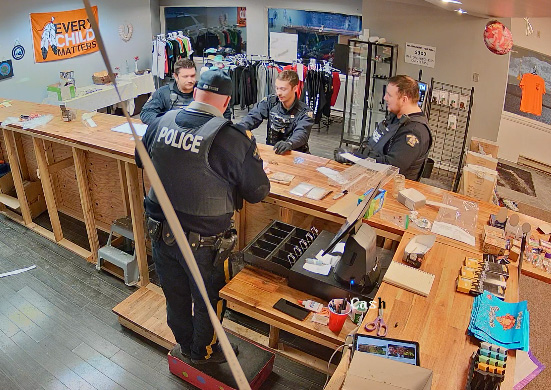
Instead, officers said they were acting under provincial cannabis legislation and described the entry as a cannabis inspection. Whitman was handcuffed, removed from the store, and held in a police cruiser for up to an hour while Mi’kmaq trading goods were unlawfully seized by police.
An RCMP officer also told Whitman – who is a member of Sipekne’katik First Nation – that he “didn’t look native” and was “not a Micmac man.” Whitman says the officer stopped making that claim only after Whitman directed him to check his wallet and read his Indian status card.
Held 23 hours without charges
Whitman was then taken to the Digby RCMP detachment and placed in a small steel-and-concrete cell measuring roughly eight feet by eight feet, with no windows. Whitman says the cell was extremely hot, that the police said the temperature could not be adjusted, and that despite being a shy person, he had take off his clothes due to the extreme heat.
“I was only given warm tap water that tasted strongly of chlorine, a filthy, unsanitary blanket, and poorly prepared food” Whitman said. He said he was not checked on by RCMP officers during his detention.
“I was basically left to cook in the heat in there,” Whitman said.
Although he was told he had a right to counsel, Whitman says police refused to let him access his phone to retrieve the contact information for Tuma Wilson, legal counsel for the Micmac Rights Association. As a result, he was forced to speak with a different lawyer. Whitman also says he could hear other detainees speaking on telephones through the steel cell doors, raising concerns about the privacy of lawyer-client communications.
Whitman remained in custody for approximately 23 hours. He suggested to Dispensing Freedom that “they were trying to break me, and get me to stop exercising my rights.” Whitman was not interrogated by police while under arrest, and said that they simply ignored him.
The hidden reason for the arrest: a “fingerprinting” warrant
The RCMP’s January 6 arrest of Mr. Whitman did not arise in a vacuum. It traces back to the restrictive “no cannabis / no advertising” release conditions imposed on him after his 2024 charges – including a condition that he “must not advertise cannabis for sale in any fashion.”
Those conditions became the subject of a constitutional challenge brought on behalf of Mr. Whitman and Mr. Cody Ward by former National Chief Delbert Riley in early 2025. Chief Riley argued that the conditions unlawfully punished Mi’kmaq treaty-rights holders and infringed their freedoms of expression and treaty-protected trade. As noted by Chief Riley in the challenge:
“The imposition of conditions upon Mr. Ward and Mr. Whitman before any finding of guilt or the addressing of the Constitutional issues at play in this matter effectively criminalize the applicant’s ability to exercise their Section 25 and 35 rights and contravene explicit treaty promises by the Crown to protect his rights and liberties, including Article 8 of the Treaty of 1752 which should be read to the applicants benefit and advantage. Surely when the treaty was being made, and the terms of Article 8 were explained, the translators did not explain to the Mi’kmaw that the rights explicitly outlined in the Treaty could be annulled for years at a time while a legal process plays itself out. To do so would be a breach of the Crown’s fiduciary duty and would disparage the Honour of the Crown.”
As a result of Chief Riley’s challenge, Whitman’s harsh cannabis and advertising restrictions were ultimately removed in June of 2025. Indeed, the efforts of Chief Riley and the MRA Legal team to constitutionally challenge cannabis conditions as prejudicial to treaty rights, have resulted in all such conditions being dropped for MRA members across the Province.
However, court records indicate that an RCMP identification requirement tied to Mr. Whitman’s earlier conditions was later treated as the basis for a Criminal Code s.145 “fails to appear / at-large” allegation – a bench warrant issued on October 21st 2025 – which was then used to raid and steal from the Peace and Friendship Trading Post again and arrest and jail Mr. Whitman on January 6th, 2026.
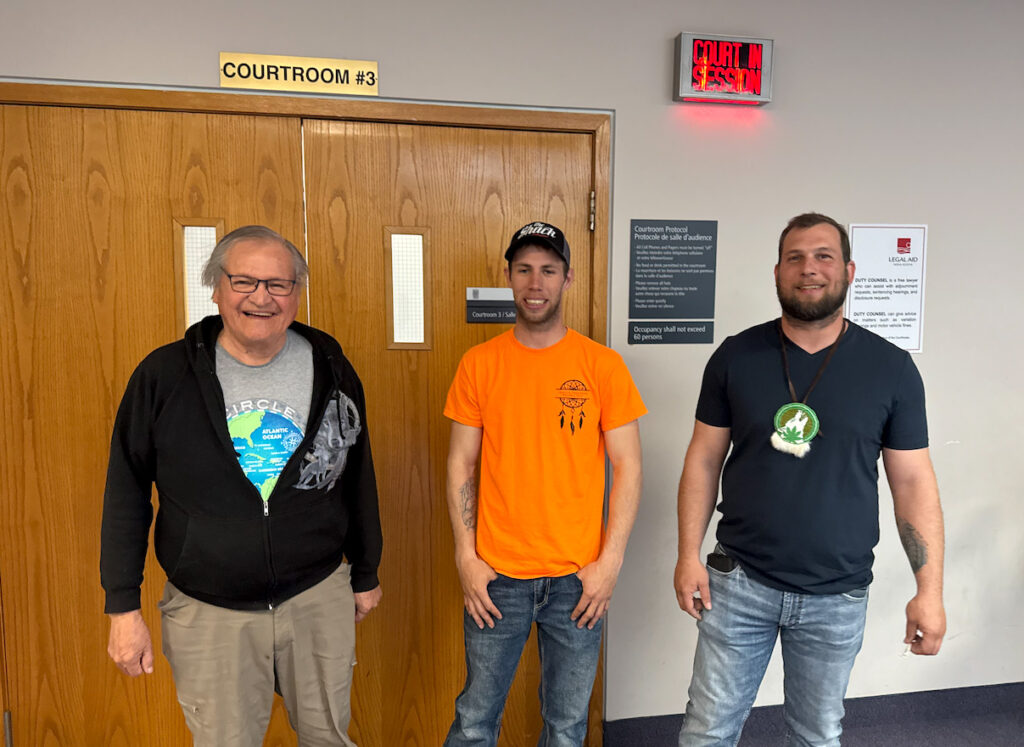
When the issue was raised in court on January 12th 2026, Judge Landry confirmed that the alleged failure was for October 21, 2024, a date when Whitman was ordered only to attend the RCMP detachment for identification purposes, not court.
Whitman also said that while in custody, RCMP officer Joe Walsh told him that he was prohibited by his conditions from being in Digby County – a claim the judge flatly rejected on the record.
Court puzzled by why Whitman was jailed
On January 7, Whitman was fingerprinted at the Digby RCMP detachment and brought into the Annapolis Royal Provincial Court in leg irons. He was held in a courthouse cell for most of the day.
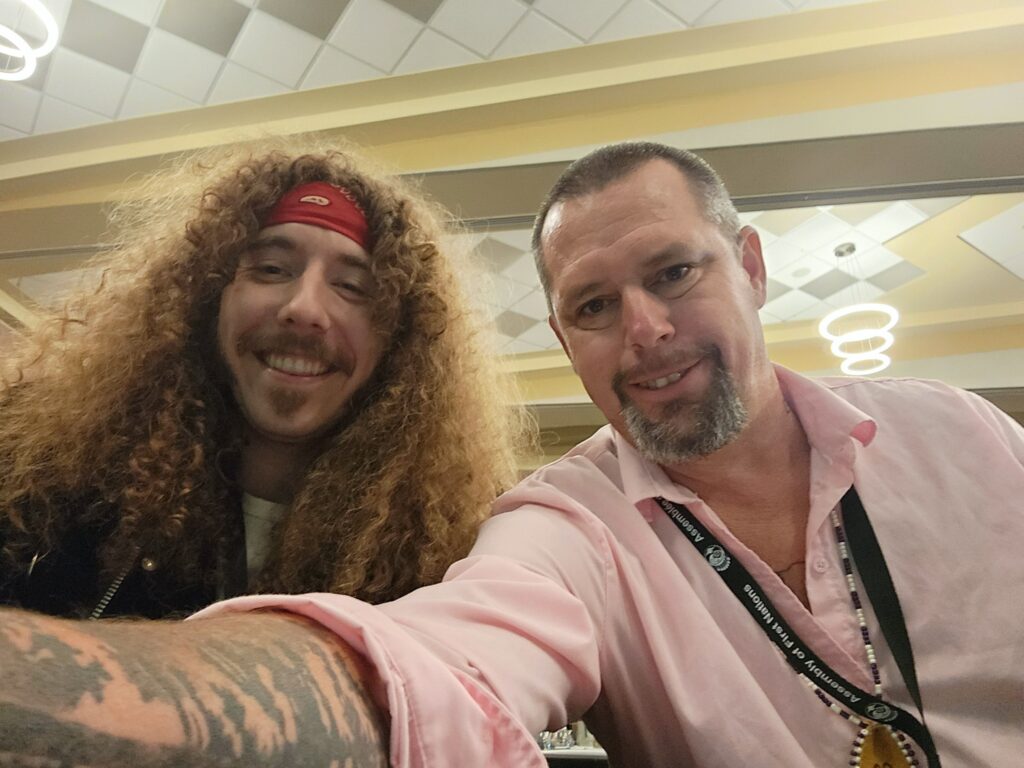
Sheriffs initially told supporters that Whitman would be sent to Burnside Jail in Halifax. It was only after the intervention of Roger Toney, Kespukwitk District War Chief and MRA executive member, that Whitman was brought before the court. Toney says he was told by the Sheriffs that an unrelated outburst in court meant that Dustin would likely be transferred to the notorious Burnside correctional facility overnight because there was “no time” to bring him before a judge.
Toney warned that if Dustin was not brought before the court by mid-afternoon he would mobilize community supporters and “fill the court,” emphasizing that he was acting in his role as district war chief to keep the peace and bring Dustin home. Ten minutes later, Mr. Whitman appeared before a judge.
Both the judge and the Crown appeared confused as to why Whitman had been detained. Whitman was released on the same conditions he already had, with no new charges and no new restrictions, other than an administrative requirement to attend Truro RCMP for yet another fingerprinting.
Treaty trade under siege
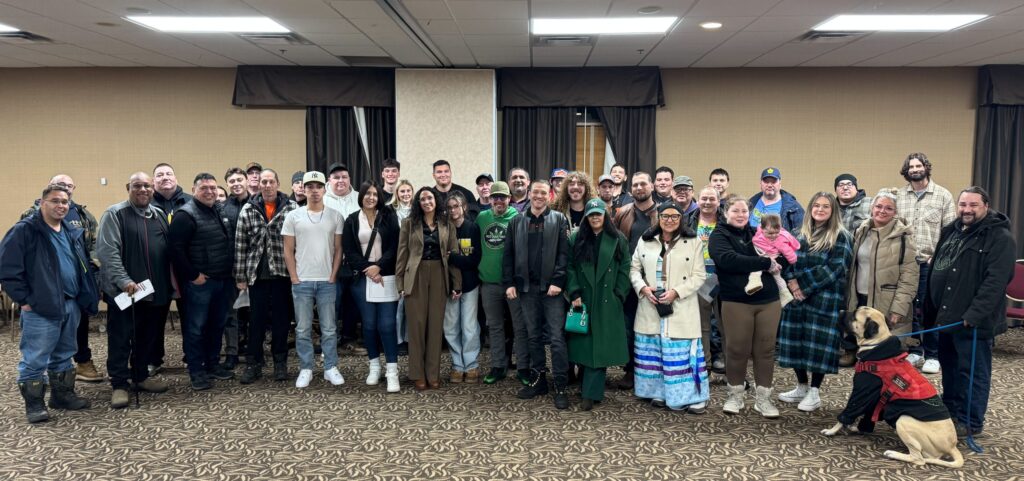
Whitman’s detention is unfolding against a wider campaign by Nova Scotia to shut down Mi’kmaq-operated truckhouses that sell cannabis and other goods as part of treaty-protected Mi’kmaq trade.
The MRA has issued a statement in response to the Province which points to the 1752 Peace and Friendship Treaty, which guarantees Mi’kmaq people the right to bring their goods to market and trade freely.
Rather than consult with Mi’kmaq governing bodies such as the MRA, the Province has escalated enforcement through raids, seizures, intimidation of landlords, and – in Whitman’s case – the use of a legally dubious fingerprinting warrant to jail a constitutionally protected Mi’kmaq entrepreneur.
According to Tuma Wilson, MRA Legal Council, “Historically Canadian police bodies have been used as a systemic tool to destabilize the Mi’kmaq, and other Indigenous peoples, in a familial sense, culturally and economically. In this situation, we are seeing economic racism in action.”
Wilson added, “We see this blatantly in situations like Mr. Whitman’s, where Mi’kmaw people are targeted, with disproportionate resources being spent on their oppression and denial of their rights, to the point of obtuse and willful ignorance.”
Former National Chief Del Riley did not hold back in his criticism of RCMP actions noting that, “This shows that the RCMP is engaged in cruel and unusual punishment and doing it for no legal reason. The RCMP have a history of delivering Indian children to death and abuse in residential schools. The RCMP comes from a racist legacy against us and they are starting it up again. The Digby RCMP are lawless and have no respect for the constitution of Canada.”

Public meeting and community response
The Micmac Rights Association will be holding a public meeting in Digby on Tuesday January 20, 2026, inviting the RCMP, provincial officials, and the media to account for their actions.
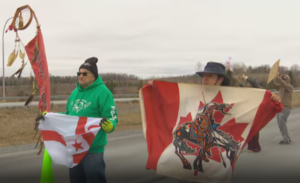
Whitman says supporters are also preparing a peaceful, ceremonial presence near the trading post to assert Mi’kmaq treaty jurisdiction and protect the site.
“This was not just about me,” Whitman said. “This was about trying to scare Mi’kmaq people away from exercising our treaty rights.”
For more information about the upcoming meeting and activities of the MRA in defence of Mi’kmaw Aboriginal and treaty rights, visit www.micmacrights.com or follow on social media at https://linktr.ee/micmacrights.
















Comments are closed.